
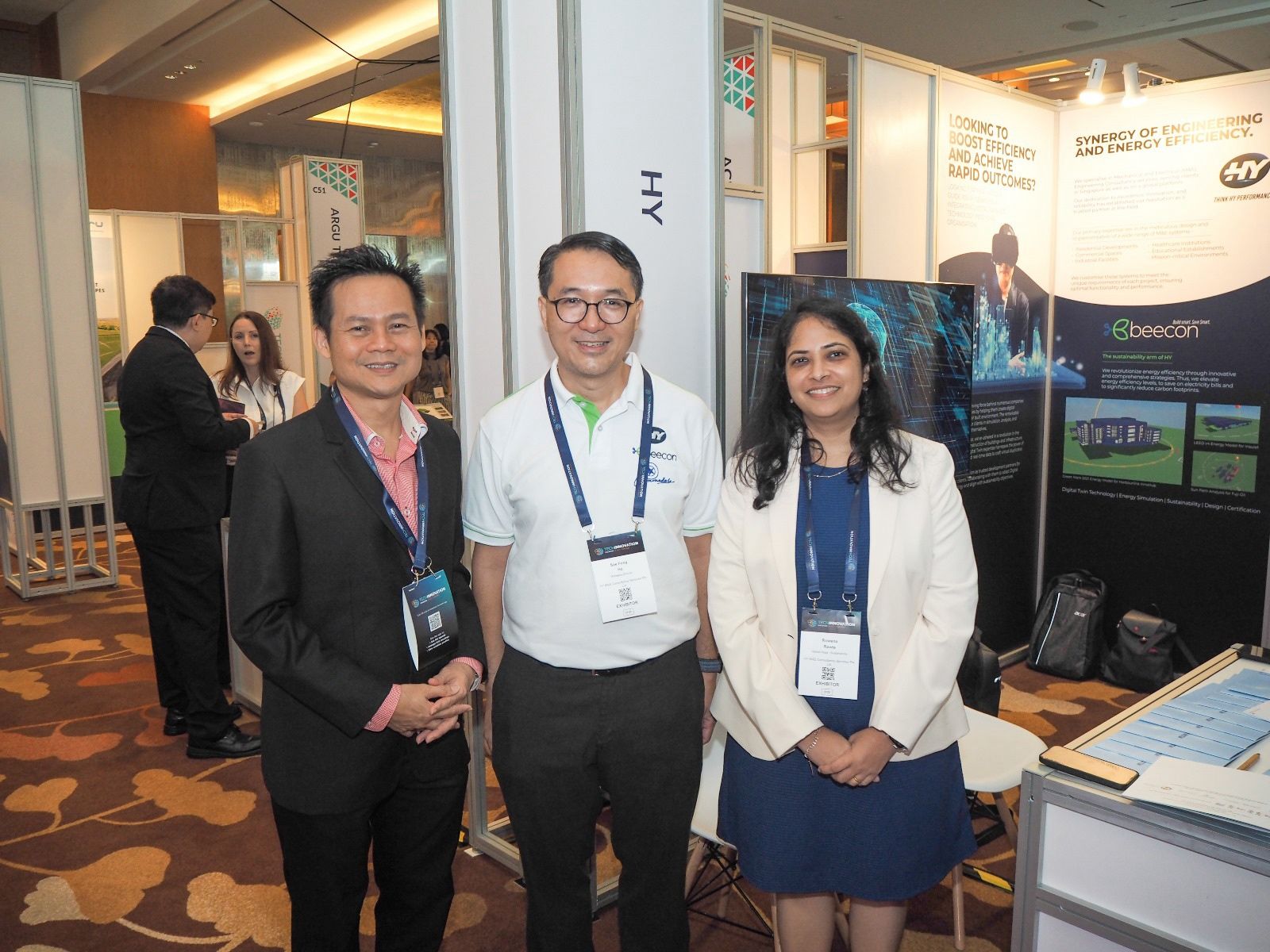
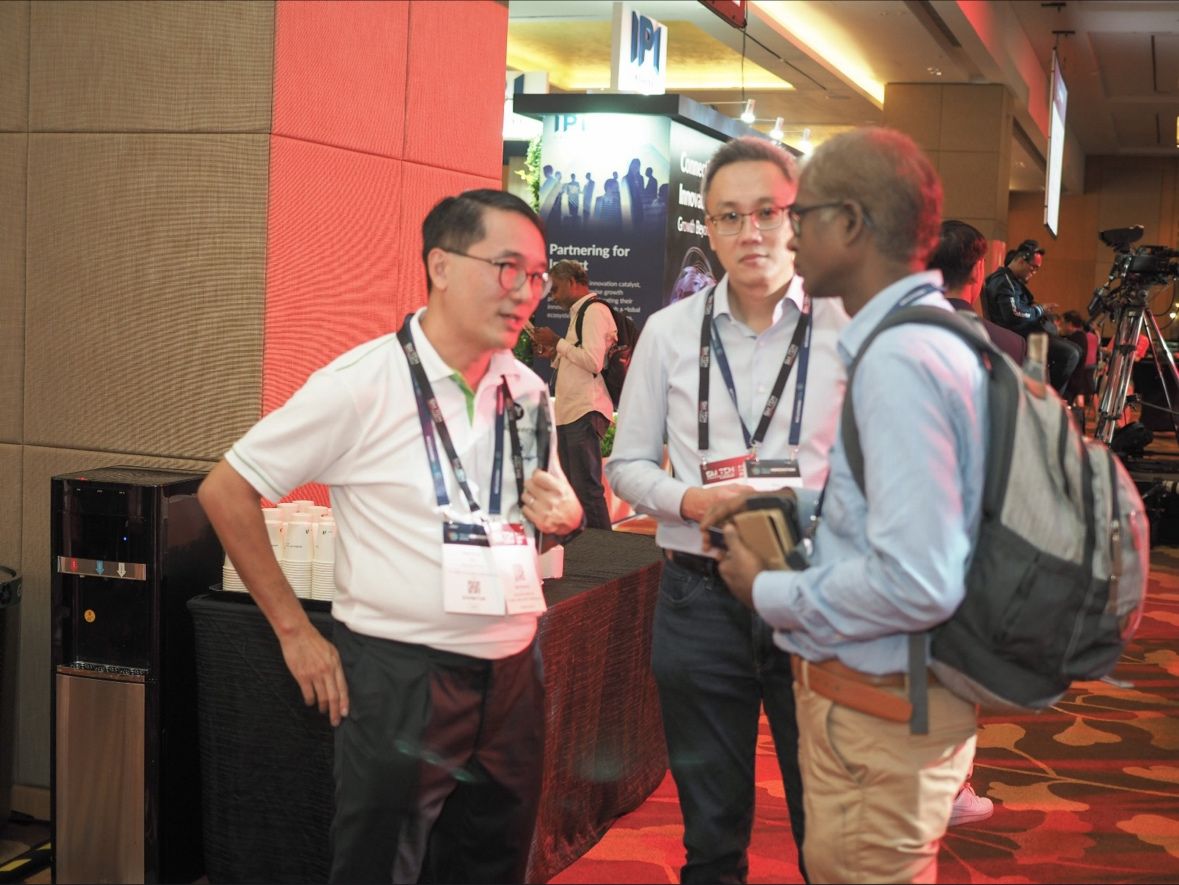
Our HY team interacted with many interesting parties beyond the built environment. The interest in #sustainability is strong and there were many enquiries on #digitaltwin . We’ve connected up with a few technology partners, namely National University of Singapore , KoolLogix Pte Ltd , SunGreenH2 , Setsco Services Pte Ltd , on some potential collaborations. Together with Singapore Week of Innovation and Technology (SWITCH) , we are immersed in a wealth of tech offerings and the tech support ecosystem.

We’re thrilled to announce that SCx Solutions Pte. Ltd. and HY have signed a Memorandum of Understanding (MOU) to explore innovative collaborations and take our partnership to the next level. SCx Solutions Pte. Ltd. is committed to driving excellence in the Built Environment through #CFD and #CAE with HY’s expertise and vision in #decarbonization and #netzero sustainable design for buildings, power systems, transportation infrastructures and industrial processes.We’re eager to embark on a journey of growth, innovation, and shared success. Congratulations to Makoto Shibahara and See Fong Ho, whose vision and leadership have paved the way for this impactful alliance!

More ever in any age, electricity has become the vital resource of many functions and facilities in our modern society. Operations, processes, business functions, comfort and even life-support are heavily dependent on the electrical infrastructure. Yet, the electrical infrastructure may not necessarily receive the right attention in regular inspection and maintenance. Through time, the electrical installation may gradually show signs of aging, illegal tempering, misuse or overloading. If left undetected, this may pose risks to personnel safety or business continuity. Regular inspection and monitoring of the electrical infrastructure directly affects the reliability, availability and security of the system. HY provides licensing services for low-voltage and high-voltage electrical installations. We believe that monthly inspection of the electrical infrastructure is important and we commit to this service standard to our clients. Our services rendered are: Submission and renewal of (high/low tension) electrical installation license application to the Energy Market Authority of Singapore. We provide professional and technical advise to ensure the safe and reliable operations of electrical installations Our regular inspections of your electrical infrastructure would further help to detect any abnormalities that will subject personnel or your operations to risks. Our Engineers shall visit and inspect your electrical installation once every month and shall report to your company the findings on each visits. We shall recommend necessary actions if any abnormalities are found. Our Licensed Engineers shall avail themselves at all times on reasonable notice to attend to any faults or breakdowns of the electrical installations. To make all necessary arrangements for the application and renewal of the Electrical License. To recommend suitable inspection frequency, maintenance schedule and any additional safety measure to be taken assessing the operation conditions of and wear and tear of your electrical installation To carry out any switching operations at your electrical installation To recommend servicing, maintenance and repair works when necessary. To provide advice on any technical or licensing matters related to your electrical installation To submit inspection reports, maintenance reports, updated single line drawings and any other relevant documents relating to your electrical installations to the Energy Market Authority. To gather the relevant information and prepare the application for an electrical installation license. To submit the electrical installation license application to EMA on our client’s behalf.

Indoor Air Quality (IAQ) testing is instrumental in identifying the root cause of health symptoms in both residential and commercial spaces. Addressing poor air quality is critical as it leads to diverse effects on occupants. Common pollutants encompass volatile organic compounds, biological contaminants, pet dander, dust, asbestos, lead, pesticides, particulate matter, secondhand smoke, and other hazardous substances. Even heightened moisture levels can catalyze indoor air quality problems. A proactive approach via comprehensive testing helps tackle these IAQ challenges, ensuring a healthier and safer environment for all occupants. Benefits of IAQ Testing Improved HealthIndications of poor IAQ include nasal irritation, throat discomfort, headaches, nausea, and fatigue, allergy or viral symptoms. Asthma sufferers may experience exacerbated issues. Localized symptoms suggest indoor pollutant origins. Prolonged exposure escalates risks of respiratory illness, heart conditions, and cancer. Prioritizing testing and remedial actions, such as switching to safer cleaning products, enhancing ventilation, and maintaining HVAC (heating, ventilation and air conditioning) systems, fosters overall well-being. Timely interventions like ductwork servicing and equipment upgrades can curb health risks associated with compromised indoor air quality. Comfortable EnvironmentPoor IAQ can trigger discomfort, including nose, eye, and throat irritation. Even a dull headache might indicate dangerous carbon monoxide exposure. Monitoring indoor humidity within the optimal range of 30% to 50% is crucial to thwart mold growth and ensure comfort. High humidity fosters stickiness, while low levels lead to dry skin, increased vulnerability to colds, and static electricity. Conducting IAQ tests can pinpoint specific issues and prompt actions to safeguarding well-being. Enhances EfficiencyInadequate ventilation leads to heightened indoor air pollution, burdening HVAC systems, and elevating energy consumption. Introducing exterior air mitigates pollutant buildup, yet unregulated influx strains the system, necessitating precise ventilation management to balance indoor air quality and operational efficiency in any climate. Higher ProductivityEnhancing employee comfort elevates productivity. A strategic focus on modern building standards and employee surveys for temperature, humidity, and potential pollutants can minimize illness and absenteeism. By integrating survey insights with floorplan analysis, one can identify patterns, address concerns, and foster a transparent reporting culture. Decreases Bad OdoursUnseen within AC ducts, odours from smoke, combustion, mould, or pests can disrupt indoor environments, posing health risks. Addressing these issues ensures comfort and fosters a more welcoming ambience for residents, employees, and visitors. Do contact us to analyze and upgrade your indoor air quality. Our team at HY can guide you with the optimal solution.
LEED v5 for Operations and Maintenance, effective from 2024, introduces a transformative approach, incorporating industry benchmarks and data-driven performance scoring for streamlined LEED certification. This forward-looking system helps users prepare for operational challenges, legislative requirements, climate risks, and emerging industry trends. The US Green Building Council is launching a beta version for projects to provide crucial feedback for refining the new rating system. LEED v5 will target carbon emissions in buildings, promoting ultra-low greenhouse gas emissions and incentivizing existing buildings to adopt zero-emission plans. It while emphasize on health, resilience, and equity. It also prioritizes safety by regularly monitoring indoor air quality, assessing infection risk, and protecting cleaning staff. It’s designed with occupant health in mind, addressing health resilience goals. LEED v5 is a crucial step towards aligning the built environment with the Paris Climate Accord’s 2030 and 2050 goals. USGBC is dedicated to reshaping building and community practices to create an eco-friendly, socially responsible, and healthy environment, ultimately enhancing quality of life. For a better understanding of LEED v5 and starting your green journey, connect with us. We will be with you at every step of the way.

Energy storage technologies, including batteries, thermal, and mechanical systems, offer key benefits: enhancing resiliency, enabling cost savings, facilitating renewable integration, and providing additional grid advantages. Coupled with advanced software for efficient energy management, these technologies contribute to a more sustainable and reliable energy landscape. Common options include pumped hydro storage, compressed air energy storage, lithium-ion batteries, and thermal energy storage systems. BatteriesLithium-ion batteries, originally popular for consumer products, now serve various applications from residential to grid-scale systems due to their declining costs and increasing efficiency. These systems can house multiple MWh of energy in a small footprint, making them highly space-efficient. Additionally, they have gained prominence in the electric vehicle industry. ThermalThermal systems harness heating and cooling techniques to store and release energy. Examples include molten salt for solar heat storage and ice storage in buildings, cutting compressor usage while providing extended air conditioning. Various systems utilize chilled water and dispatchable hot water heaters, using excess energy to charge and subsequently discharge the storage mediums as required. FlywheelsFlywheels store energy in rapidly spinning rotors, providing short-term high-power absorption and release. They effectively balance electricity supply and demand, responding rapidly to control signals. Also, capture braking energy in electric trains and act as power backups during grid outages, crucial in preventing critical manufacturing losses due to momentary interruptions. Pumped Hydro PowerPumped hydroelectric facilities dominate current energy storage, utilizing surplus power to lift water to higher reservoirs during off-peak hours. They release this water to generate electricity during peak demand. Siting these systems is challenging due to their need for specific terrain and significant space. If you are looking for an energy storage system, we can help you choose the best system suitable for your business.

