

For decades, power system harmonics were treated as a localized maintenance problem: measure Total Harmonic Distortion (THD), install a filter, and meet IEEE 519 limits. Today, that playbook is becoming obsolete. The convergence of AI data centres, megawatt-scale EV/maritime charging depots, and high-penetration Inverter-Based Resources (IBRs) has transformed harmonics into a dynamic grid stability challenge. Here are four key shifts engineers and facility owners must watch: From Static to Inter-Harmonics: Variable-speed drives and SiC fast-chargers produce time-varying inter-harmonics that render traditional passive LC filters ineffective. AI-Driven Attribution: Physics-Guided Neural Networks (PGNNs) now allow utilities and operators to definitively decouple background utility distortion THDv from customer current injection THDi. Inverters as Active Filters: Advanced firmware algorithms enable solar and battery inverters to utilize spare capacity as active power quality compensators, eliminating the need for standalone filter hardware. Protection Relaying Risks: Severe harmonic penetration can blind or mislead digital protective relays (ANSI 87T), making coordinated relay-setting studies critical under IEC 61850 standards. The Bottom Line: Power quality is not a post-commissioning afterthought. Harmonic resonance analysis and dynamic transient modeling must be integrated into the conceptual design stage. #PowerQuality, #PowerSystems, #ElectricalEngineering, #Harmonics, #IEEE519, #DataCentres, #RenewableEnergy, #ElectricVehicles, #BESS

We are deeply humbled and proud to announce that HY has received the prestigious Green Spirit Award at the 27th Singapore Environmental Achievement Awards (SEAA) 2026, organised by the Singapore Environment Council (SEC) ! It was a profound honour to receive this recognition in the presence of our Guest of Honour, Ms Grace Fu , Minister for Sustainability and the Environment and Minister-in-charge of Trade Relations, whose leadership and advocacy continue to inspire Singapore’s climate action and green economic transition. ⚙️ “Think HY Performance” — 40+ Years of Engineering Heritage, Evolving with Purpose For over four decades, HY has been rooted in Singapore’s built environment. Today, as our sector navigates the climate imperative, we believe that engineering expertise must be an active catalyst for environmental progress. It is our conviction at HY, that engineering expertise can play a vital role in enabling environmental progress. By applying technical knowledge to optimise building performance and support more sustainable infrastructure, we can contribute to the transition towards a greener built environment while continuing to strengthen our own sustainability practices. 🚀 Bridging Engineering Rigour & Sustainable Innovation This award recognises the collective steps we have taken to embed environmental stewardship across our business and client offerings: 🔹 Advanced Sustainability Consultancy: Driving real-world decarbonisation through BCA Green Mark certifications, whole-life carbon assessments, energy modelling, and Digital Twin-enabled building performance optimisation. 🔹 Decarbonising Core Infrastructure: Optimising central chilled water plants, advancing Super Low Energy (SLE) designs, and pioneering solutions for the broader national energy transition (BESS, demand response, and Energy-as-a-Service models). 🔹 Walking the Talk Internally: Establishing structured environmental policies, public sustainability reporting, continuous performance tracking, and extensive workforce upskilling to nurture future-ready green engineering talent. 🙏 With Sincere Appreciation As SEC Chairman Ms Isabella Huang Loh PBM shared during the ceremony: “At the heart of every transformation are people, because ultimately, people turn ideas into action and action into lasting change.” This milestone is dedicated to: The entire HY family: Your technical excellence, resilience, and willingness to learn and innovate drive our transformation every day. As we look ahead to #SingaporeGreenPlan2030 and our collective Net Zero 2050 targets, HY remains steadfast in our commitment to engineer high-performing, resilient, and sustainable communities for generations to come. 🌏💡

Just wrapped up an interesting trip to Jiangsu, China, conducting Factory Acceptance Testing (FAT) for one of VFlowTech’s latest Flow Battery systems. 🔋 This unit is heading to a microgrid project with the Maritime and Port Authority of Singapore (MPA) on Pulau Satumu (Raffles Lighthouse). Getting hands-on with the technical details during this testing phase was a good experience—and a testament to how VFlow is successfully scaling up to deploy higher-capacity, long-duration energy storage systems. Why FAT Is Critical for Flow Batteries Unlike solid-state batteries, a Vanadium Redox Flow Battery is effectively a miniature chemical plant. Validating it in the factory before it ships to a remote offshore island is important. * Hydraulic & Fluid Integrity: We test pumps, piping, flow meters, and valves under pressure to ensure zero leaks, balanced flow rates, and optimal pressure across the stack. * Electrochemical Performance: Factory testing verifies core stack efficiency, state-of-charge (SOC) balancing, and capacity output before charging the system with full electrolyte volumes on-site. * BMS & Process Automation Control: The Battery Management System controls continuous chemical processes. FAT allows us to rigorously test logic loops, automated safety shut-offs, and sensor feedback in real time. Built for Offshore Microgrids Catching design integration tweaks at the factory ensures smooth deployment on Pulau Satumu, where flow batteries bring unmatched advantages to isolated environments: * Non-Flammable Safety: Water-based electrolyte eliminates thermal runaway risks in remote locations. * 20+ Year Lifespan: Unlimited cycle life with minimal electrolyte degradation over decades of use. * Decoupled Power & Energy: Scaling storage duration simply means larger tanks, not replacing the stack. Excited to see this system take us one step closer to resilient, clean power for Singapore’s maritime infrastructure! 🌏⚡ #EnergyStorage #FlowBatteries #CleanTech #VFlowTech #FactoryAcceptanceTest #Microgrid #RenewableEnergy #PulauSatumu

It was a blazing hot, cloudless afternoon—prime solar generation weather. Yet, the public display panel for a rooftop solar installation on a public housing block read 0 kWh generated that day. The panels on the roof looked pristine. But underneath, the system was completely dead in the water. This isn’t an isolated incident, but rather a classic example of silent system failure in urban renewable infrastructure. While solar PV modules are notoriously durable with failure rates well under 1% per year, the rest of the system—specifically solar inverters—tells a very different story. The Weakest Link: Why Inverters Fail Some industry peers shared that it is common to see dysfunctional inverters in our local solar installations. Inverters account for majority of all solar PV system failures. In tropical environments with high lightning activity, several factors exacerbate this:● Induced Surges from Lightning: Direct strikes are rare, but nearby strikes create electromagnetic pulses (EMPs). Long rooftop DC cable runs act like massive antennas, picking up high-voltage spikes that fry sensitive power electronics (like MOSFETs/IGBTs) or trip Surge Protection Devices (SPDs).● Nuisance Tripping: High humidity and heavy downpours increase transient ground leakage currents, triggering Residual Current Circuit Breakers (RCCBs) or safety interlocks.● Thermal Stress: Prolonged exposure to high ambient temperatures accelerates component degradation and thermal cycling fatigue. When an inverter trips or burns out, the panels keep absorbing sunlight, but zero energy reaches the grid or the building. If monitoring systems aren’t actively managed, these systems can sit idle for weeks—or months—without anyone noticing. The Real Problem: The Data Void How can we guarantee Quality of Service (QoS) and enforce Service Level Agreements (SLAs) when real-world failure data remains a black box?Currently, public data on:● Inverter Mean Time Between Failures (MTBF) in tropical microclimates,● Surge protection endurance and trip frequencies, and● Actual system uptime vs. theoretical yield…is virtually non-existent in the public domain. Without transparent data, financial models rely on optimistic uptime assumptions. This skews the true Levelized Cost of Energy (LCOE) by overlooking frequent inverter replacements, unscheduled maintenance calls, and lost generation revenue. If we want rooftop solar to be a resilient component of the green transition, we need to move beyond standard panel efficiency metrics and focus on system-level reliability. Sharing real-world operational data across the engineering and clean energy community is essential if we want to build solar systems that last as long as the panels on top of them. #SolarEnergy #RenewableEnergy #ElectricalEngineering #SolarPV #Sustainability #Inverters #GridResilience #AssetManagement

Cross-Border Collaboration 🇸🇬 🇲🇾 What an incredibly productive day in Kuching, Sarawak! This trip was part of an intentional business mission organized by the Singapore Business Federation (SBF), specifically designed to bring Singapore companies on the ground to understand, engage, and connect with the Sarawak government and the local business community—particularly within the rapidly evolving sectors of renewable energy and the hydrogen economy. Alongside SBF and a dedicated contingent of fellow members from the Hydrogen and Fuel Cell Association of Singapore (HFCAS), our team had the privilege of engaging directly with the visionary architects behind Sarawak’s clean energy transformation. Being surrounded by and interacting with the key players driving Singapore’s hydrogen and fuel cell market today brought back a flood of memories. It helped me reminisce about my days exploring fuel cell applications at DSTA over 20 years ago! Back then, we were looking at the cutting edge of what was possible—from regenerative fuel cells for offshore applications to Direct Methanol Fuel Cells (DMFC) for soldier systems. To my absolute amazement, some of the very mission members on this trip are now involved in projects that we initially birthed and initiated at DSTA all those years ago. What an incredible, full-circle connection after two decades! Sarawak is fast becoming the green hydrogen epicenter of Southeast Asia, fueled by its immense renewable hydropower potential. Our discussions centered on cross-border synergies, technology deployment, and how Singapore’s hydrogen ecosystem can plug into these massive infrastructure plays. A massive thank you to the leadership teams at these key organizations for hosting us and sharing their strategic visions: The Policy & Investment Drivers:Economic Planning Unit (EPU) Sarawak & InvestSarawak – for outlining the economic runway under the Post Covid 19 Development Strategy 2030 (PCDS 2030).Ministry of Utilities and Telecommunication Sarawak– for showing us what a future-ready, integrated utility master plan looks like. The Energy & Infrastructure Giants:Sarawak Energy Berhad (SEB) & SEDC Energy Sdn Bhd – the powerhouses driving massive green hydrogen production and zero-emission transit infrastructure.Petroleum Sarawak Berhad (PETROS) – for an insightful deep dive into regional energy management and carbon capture horizons. On-The-Ground Workforce Development:We closed out our engagements with a fantastic site visit to Sarawak Skills – Neuto Sdn Bhd Bhd, seeing firsthand how they develop the skilled workforce to support the hydrogen economy. The transition to a hydrogen economy isn’t a journey any single country can make alone. By combining Singapore’s legacy of technology exploration, financing, and project deployment capabilities with Sarawak’s immense natural resources, the possibilities for a decarbonized ASEAN region are limitless. Excited for what the next 20 years will bring! 🚀

HY’s Managing Director shares insights on building resilient infrastructure through Cyber-Informed Engineering, highlighting the role of cybersecurity in enabling a secure and sustainable energy future. Ho See Fong was honored to participate as a panelist at the 20th International Federation for Information Processing (IFIP) WG 11.10 International Conference on Critical Infrastructure Protection (ICCIP 2026), held at Singapore Institute of Technology, hashtag#PunggolDigitalDistrict. It was a privilege to sit alongside top practitioners in the cybersecurity field—including Mr Zach Tudor (Idaho National Laboratory ) and Mr Dicky Wong (Syber Couture)—to discuss “Critical Infrastructure Without Borders.” – moderated by Panel Chair, Prof Daisuke Mashima, Singapore University of Technology and Design (SUTD). Coming from the energy and consultancy space, it was a humbling experience to share the stage with some of the world’s leading cybersecurity experts. My goal was to highlight a truth that is becoming increasingly clear: for the Energy Transition to work, Cybersecurity must be foundational. For nations like Singapore, the impetus to accelerate integration of renewable sources, adopt low-carbon technologies, and establish regional energy interconnects has never been greater. However, as we “open up the grid” for more control and participation through Distributed Energy Resources (DERs) and Virtual Power Plants (VPPs), we are simultaneously expanding the attack surface for cyber threats. Key takeaways from the session:🔹 The urgency of adopting a “Cyber-Informed Engineering” (CIE) mindset—building security into our energy systems from the ground up, not as an afterthought.🔹 The challenges and opportunities of an interconnected ASEAN regional grid. Taking a leaf from the European Interconnected Grid, cybersecurity defence must go regional as well. 🔹 Why the transition to clean energy must go hand-in-hand with robust cybersecurity defenses to ensure national resilience. A huge thank you to my fellow panelists for the insightful exchange. Special thanks to Matthew Chew in leading HY into this realm of cybersecurity engineering. Read more about the conference here

How do you upgrade a standard emergency power system into a smart, self-sufficient microgrid? We are thrilled to share that HY, along with our esteemed industry collaborators, addressed this very question at the 25th Conference of the Electric Power Supply Industry (CEPSI 2025) in Singapore. Our team from HY, See Fong Ho and Pei Qi Chua, had the privilege of collaborating with experts from DSTA, ComAp Group, and Singapore Polytechnic on a technical paper. Our paper, “Challenges and Successful Completion Of Upgrading Emergency Generator System Into Microgrid“, details the successful conversion of a conventional emergency power system into a smart, resilient microgrid. Download the paper Key insights include: Enhanced Resilience: The system interconnects generators at different sites, allowing a development to operate as a self-sufficient independent grid and share electrical loading during a power failure. Real-World Data: The paper shares actual on-site Testing & Commissioning (T&C) waveforms, showing the generators’ performance from startup to full parallel operation and load sharing. Solving Key Challenges: Practical solutions for overcoming major hurdles, such as managing power transformer inrush current during energization, are covered. Future-Ready Design: This microgrid is not just for today. It is designed to seamlessly integrate future distributed energy resources (DERs), including renewables and energy storage systems. Congratulations to our team and all our collaborators on this significant contribution to building more resilient and future-proof power infrastructure!

HY is honoured to have been the Education Partner to Singapore Green Building Council for this seminar, and we extend our deepest gratitude to our esteemed collaborators, Belimo and PassiveLogic for making this a uniquely enriching experience for everyone involved. The discussions reinforced the critical role of digital twins in navigating the complexities of modern buildings and achieving our ambitious sustainability goals. Powerful insights shared: Defining the Modern Digital Twin: We explored the necessity of a customized definition for digital twins in the built environment. The HYDRAS framework, for instance, goes beyond basic models by integrating 3D visualizations with physics-based environmental modelling, real-time BMS/IoT data, and energy asset information to provide truly actionable strategies for management. A Paradigm Shift: Controls Must “Know” the Building: A key emphasis was the long-standing disconnect between controls and reality. For decades, building management systems were designed with controls that had no inherent knowledge of complex building physics. This results in a BMS that simply doesn’t understand the building it operates. The path forward is clear: controls need to know the building, embedding its physics directly into the operational logic for truly intelligent management. Uncovering Hidden Potential: The BELIMO CESIM House case study provided a compelling real-world example. Even in a state-of-the-art, IGBC Platinum-rated factory, the digital twin simulation uncovered a surprising potential for ~22% in further energy optimization. This proves that even the most advanced buildings have opportunities for data-driven improvement. The Future is Autonomous: PassiveLogic offered a look into the next generation of building management with the world’s first platform for true building autonomy. Their approach uses “Quantum Digital Twins” as a foundation that enables “Future-Forward Control”—allowing systems to predict and choose optimal strategies rather than just reacting to past events. Foundational Pillars are Non-Negotiable: A recurring theme was the critical importance of a solid data infrastructure. Key lessons highlighted the need for a centralized BMS, comprehensive sub-metering, and a well-structured data pipeline as prerequisites for any successful digital twin implementation. The path to a smarter, greener built environment is paved with collaboration and innovation, and we at HY are excited to continue this journey with our industry partners. A special shout-out to the organizing team—Rowena Rawte, Matthew Chew, Deepti Shrimali and Pranati Trivedi for the great job in bringing this all together. Let’s continue the conversation on building a sustainable and resilient future!

HY is thrilled to announce that our MD Er. Ho See Fong has been officially appointed as a member of the Professional Engineers Board of Singapore.
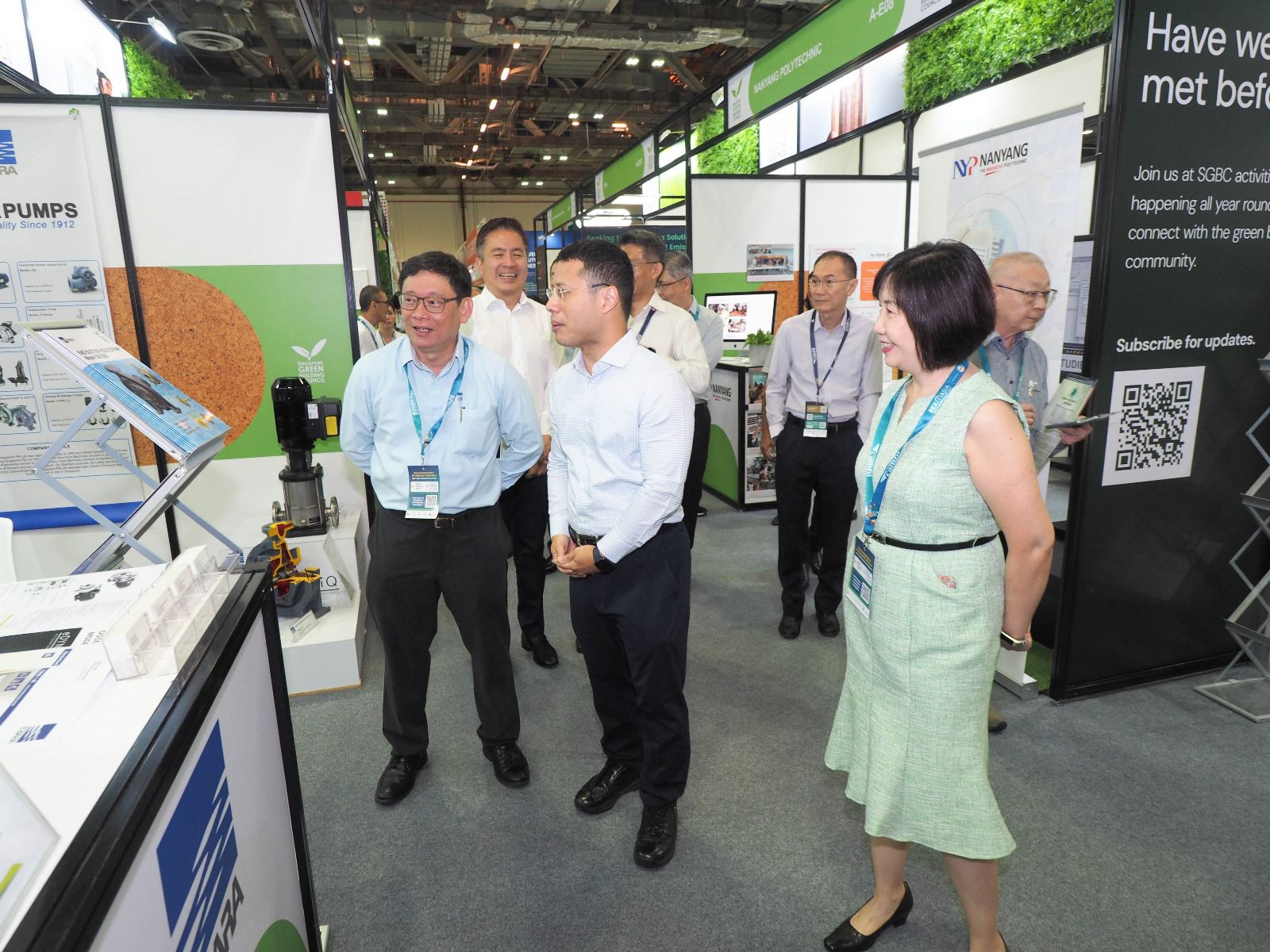
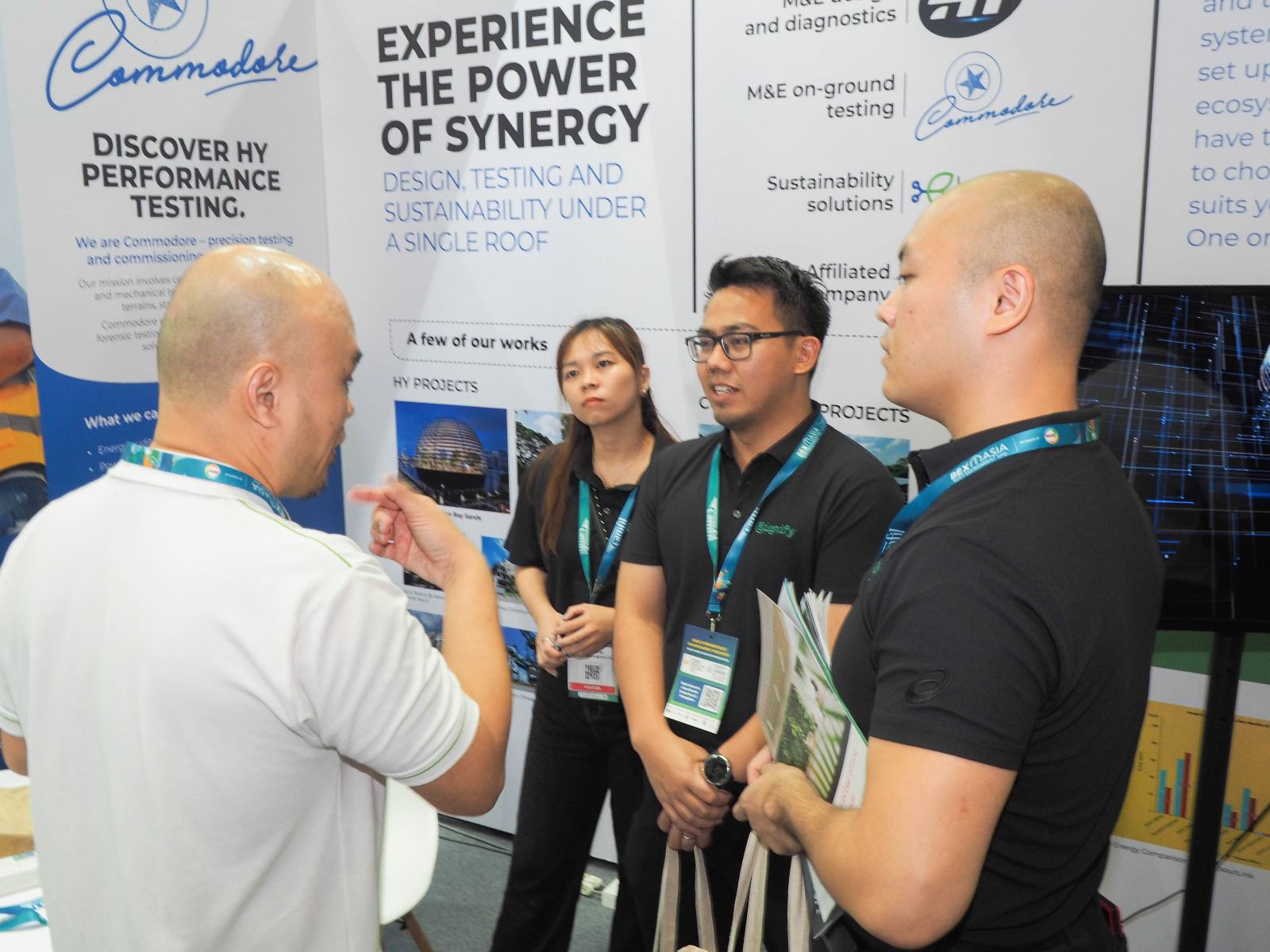
The HY team had a fruitful day @ BexAsia today, interacting with various practitioners in the built environment. Sharing of ideas and catching up with our partners.

